

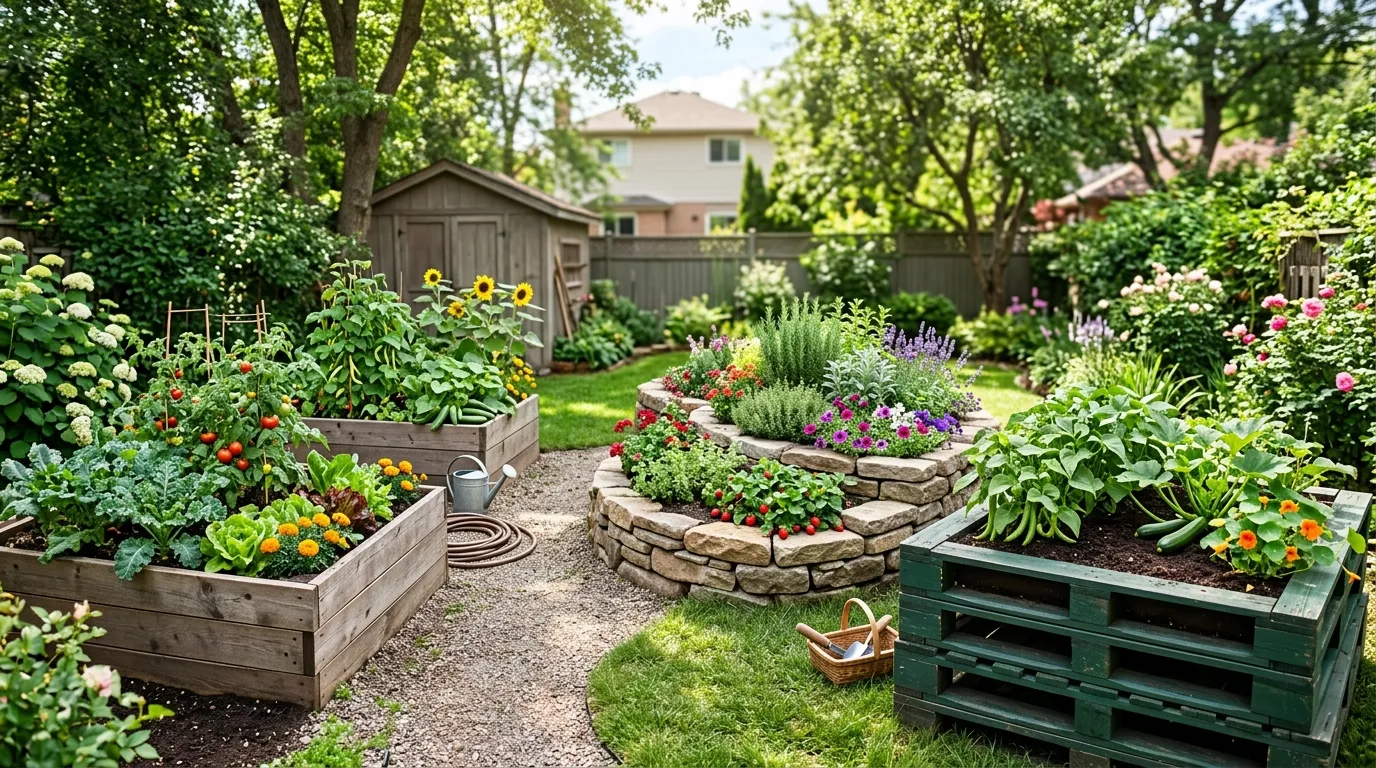
Seeking innovative raised gardening bed ideas? Discover how structured garden environments foster educational growth, cultivate profound calm, and bring intense focus to your outdoor learning space.
This comprehensive guide explores top-tier raised gardening bed ideas merging sustainable agriculture with education. You will learn practical construction methods, avoid common pitfalls, and gain expert insights to build productive, calming gardens that maximize long-term harvest potential, environmental awareness, and mental clarity.
The Educational Power of Structured Gardening Environments

Modern educators and homeowners alike realize that learning extends far beyond classroom walls. Implementing practical raised gardening bed ideas offers a profound opportunity to teach biology, sustainability, and patience. The physical act of tending to a structured garden creates a unique sanctuary that actively promotes mental clarity.
When you engage in gardening, you strip away the digital noise of daily life. You analyze soil health, observe plant growth cycles, and manage natural resources. By applying focused attention to these natural frameworks, you help yourself and your students breathe, assess, and learn with absolute intention. Building an outdoor classroom requires clear boundaries, and raised beds provide exactly that.
Cultivating Calm and Focus in the Garden
Operating in demanding environments often feels overwhelming. Gardening flips this dynamic entirely. It champions the philosophy that true, sustainable mental health thrives when you operate from a place of calm focus. You cannot cultivate a thriving garden if your approach is frantic.
A focused mindset allows you to prioritize high-impact gardening activities. You stop worrying about every minor weed and start doubling down on the foundational soil health that actually yields results. This focused methodology is why educational platforms increasingly utilize sustainable outdoor learning spaces. It strips away the noise and connects students directly to the earth.
Aligning Garden Design with Learning Objectives
Students and novice gardeners need clear, concise environments to thrive. They do not want convoluted planting spaces or confusing maintenance routines. Effective raised gardening bed ideas force you to look at your outdoor space through the eyes of a learner.
You must ask yourself specific questions. Do your plant choices actually help you learn about local ecosystems? Is your watering process efficient? By mapping your garden design to specific educational needs, you create a natural pull effect in learning. The physical boundaries of the beds help segment lessons into digestible modules.
Mini-Conclusion: Embracing structured garden designs means abandoning chaotic yard management in favor of calm, intentional alignment with educational goals.
Top Raised Gardening Bed Ideas for Any Space
As community gardening becomes increasingly popular, standing out requires more than just a pile of dirt. It requires a profound understanding of how to position and build your beds. Proper design provides the blueprint for this success. Implementing diverse raised gardening bed ideas helps you identify which spaces to utilize, which plants to companion, and which soil structures to implement entirely.
Shifting from Chaos to Structure
Many backyard gardeners hit a yield plateau because their early-stage planting tactics no longer work at scale. What worked for a single tomato plant will not work for a full vegetable yield.
By introducing rigid frameworks—literally, the walls of the raised beds—you actually create agricultural freedom. When you know exactly where the boundaries of your garden lie, you operate with confidence. This structured environment fosters creativity and innovation, allowing your organic produce to truly shine.
Data-Driven Plant Management
You cannot grow what you cannot measure. A massive component of advanced raised bed management involves tracking watering schedules, soil pH, and sunlight hours. You need to know exactly how much water your bed retains, how long your growing season lasts, and what your soil nutrient density is.
Once you have this data, you stop guessing. You make decisions based on statistical realities rather than emotional hunches. This calm, data-driven approach removes the anxiety from garden management. You learn to trust the environmental data.
Mini-Conclusion: Moving from chaotic, emotion-based planting to structured, data-driven horticulture is the hallmark of a successful educational garden.
Material Comparison for Your Garden Beds
Choosing the right material represents the first major decision in your journey. Understanding the difference between building materials highlights the necessity of proper planning. Certain raised gardening bed ideas require specific materials for maximum longevity and educational value.
|
Material Type |
Durability |
Cost |
Educational Value |
Environmental Impact |
|---|---|---|---|---|
|
Untreated Cedar |
High (10-15 years) |
High |
Excellent for teaching natural decay |
Low/Eco-friendly |
|
Galvanized Steel |
Very High (20+ years) |
Medium |
Good for teaching heat retention |
Moderate |
|
Recycled Plastic/Composite |
Extreme (30+ years) |
High |
Great for recycling discussions |
Very Low |
|
Standard Pine |
Low (3-5 years) |
Low |
Good for temporary or budget projects |
Low |
|
Brick and Stone |
Permanent |
Very High |
Demonstrates permanent infrastructure |
Moderate |
Mini-Conclusion: Selecting the right material dictates the lifespan of your raised bed and heavily influences the ongoing maintenance required.
Step-by-Step Guide to Implementing Raised Gardening Bed Ideas

Executing a new garden strategy requires precision. Follow these steps to implement raised gardening bed ideas effectively within your yard or schoolyard.
Step 1: Comprehensive Site Analysis
Before you build anything, you must understand your current baseline. Conduct a deep audit of your yard’s sunlight and drainage.
- Observe the area for a full day to track direct sunlight. Most vegetables require six to eight hours of direct sun.
- Analyze the ground slope to ensure proper water runoff. You do not want water pooling at the base of your wooden beds.
- Review your water access to guarantee easy hose or irrigation reach. Carrying watering cans across a large yard quickly becomes tedious.
This audit forms the foundation of your new gardening initiative. It highlights exactly where you need to apply your focus.
Step 2: Strategic Soil Allocation
Once you know where the beds will go, you must allocate your soil resources accordingly. This often means sourcing high-quality compost and moving away from poor native dirt.
If your soil tests show that your organic soil management requires more nitrogen, you need to shift your compost strategy there. Gardening demands that you act decisively with your soil amendments. Do not use old, depleted dirt; fund your project with nutrient-dense soil.
Step 3: Planting, Measurement, and Optimization
Planting is where most beginners fail. They buy beautiful seeds and then plant them too closely together. Successful execution requires active, daily commitment.
Set weekly growth tracking metrics and review them religiously. If a new crop falls flat, pull it quickly. If a specific companion planting strategy shows promise, replicate it immediately. Optimization is an ongoing loop of planting, measuring, and adjusting.
Mini-Conclusion: Successful garden implementation requires rigorous site auditing, disciplined soil building, and relentless crop optimization.
Maximizing Yield with Advanced Raised Gardening Bed Ideas
To truly transform an educational space, you must push beyond the basics. Advanced raised gardening bed ideas incorporate vertical growing, seasonal extension, and intensive planting methodologies.
Implementing Vertical Trellis Systems
You can drastically increase your growing area by building upward. Attach a sturdy cattle panel or wooden trellis to the north side of your raised bed. This allows vining plants like cucumbers, pole beans, and indeterminate tomatoes to climb. Growing vertically keeps fruit off the soil, reduces disease, and makes harvesting significantly easier for students.
Season Extension Techniques
Educational gardening often conflicts with standard school calendars. Summer harvests happen when students are away. By installing PVC hoops and greenhouse plastic over your beds, you create microclimates. These low tunnels protect early spring seedlings from frost and keep autumn crops producing well into winter.
Square Foot Gardening Methods
Divide your raised bed into a grid of one-foot squares. This highly structured method dictates exactly how many seeds or plants fit into each square based on their mature size. It eliminates wasted space, reduces weed growth by shading the soil, and provides an excellent mathematical exercise for learners.
Mini-Conclusion: Expanding your methodology to include vertical structures and season extenders maximizes both your harvest and your educational opportunities.
Connecting Soil Health to Human Health

A core lesson in any educational garden revolves around the microbiome. The health of the soil directly impacts the nutrient density of the food, which in turn impacts human health.
Building the Soil Food Web
Healthy raised beds require more than just fertilizer. They require a thriving ecosystem of bacteria, fungi, nematodes, and earthworms. Teach students how to cultivate this soil food web by adding inoculants, brewing compost tea, and avoiding harsh synthetic chemicals.
Composting Integration
Do not treat composting as a separate activity. Integrate worm composting (vermicomposting) directly into your raised beds by installing a PVC pipe with holes drilled into the sides. Bury it halfway into the soil, drop kitchen scraps inside, and let the worms distribute the nutrients directly to the plant roots.
Mini-Conclusion: Fostering a deep understanding of soil biology transforms a simple gardening task into a profound lesson on interconnected ecosystems.
Common Mistakes to Avoid
Many people struggle when implementing new garden frameworks. Avoid these common pitfalls to ensure your efforts succeed.
- Building Too Wide: Do not build a bed wider than four feet. You must be able to reach the center without stepping on the soil and compacting it.
- Ignoring Drainage: Your plant roots need oxygen just as much as water. Ensure your beds have proper drainage to prevent root rot.
- Using Toxic Materials: Avoid pressure-treated wood manufactured before 2003, as it contains harmful chemicals that can leach into your food.
- Impatience: True growth takes time. Do not abandon a gardening strategy just because your seeds did not sprout in two days.
Pro Tips and Expert Insights
To elevate your garden from average to exceptional, implement these advanced tactics.
- Layer Your Soil: Utilize the Hugelkultur method by placing rotting logs and branches at the bottom of deep raised beds. This retains moisture and builds long-term fertility.
- Focus on Mulch: It costs significantly less to mulch your beds than to constantly water them. Heavy mulching prevents weed growth and regulates soil temperature.
- Leverage Companion Planting: Plant basil near tomatoes to deter pests naturally. This shared environment creates deeply cohesive, thriving ecosystems.
- Embrace Observation: Give yourself dedicated time every week to simply watch your garden. Pest management requires uninterrupted focus and early detection.
Conclusion
Implementing these raised gardening bed ideas transforms any yard into an educational sanctuary of calm and focus. Building these structures empowers you to grow healthy food while cultivating mindfulness and environmental awareness. Ready to elevate your outdoor learning space? Start building your sustainable garden today and harvest the endless benefits.
FAQs
1. What are the best raised gardening bed ideas for beginners?
For beginners, simple cedar or galvanized steel beds measuring 4×8 feet are ideal. They provide enough space to experiment with different crops while remaining easy to manage and harvest without stepping on the soil.
2. How deep should a raised garden bed be?
A standard raised bed should be at least 10 to 12 inches deep to accommodate most vegetable root systems. If you plan to grow root vegetables like carrots or potatoes, aim for a depth of 18 to 24 inches.
3. What is the best wood for raised garden beds?
Cedar and redwood are the gold standards for raised garden beds. They contain natural oils that resist rot and insect damage, allowing the beds to last for a decade or more without the use of chemical treatments.
4. Do raised beds need drainage holes?
If your raised bed sits directly on the earth, the ground acts as natural drainage. However, if you build a raised bed with a solid bottom or place it on concrete, you must drill adequate drainage holes to prevent root rot.
5. What soil mix is best for raised beds?
The ideal soil mix is often called Mel’s Mix: one-third blended compost, one-third peat moss (or coconut coir for sustainability), and one-third coarse vermiculite. This provides excellent aeration, moisture retention, and nutrient density.
6. How do raised gardening beds improve focus and calm?
Gardening requires mindfulness and repetitive, grounding physical tasks like weeding and watering. This connection to nature lowers cortisol levels, reduces anxiety, and forces the gardener to remain present in the current moment.
7. Can I build a raised bed on concrete?
Yes, you can build a raised bed on concrete. However, you must ensure the bed is deep enough (at least 18 inches) to accommodate roots, and you must design it with proper drainage to allow excess water to escape from the bottom.
8. What are common mistakes when building raised beds?
Common mistakes include building the beds too wide to reach the center, using toxic treated wood, forgetting to line the bottom with cardboard to block weeds, and filling the bed with low-quality topsoil instead of nutrient-rich compost.
9. How do I keep pests out of my raised bed?
Implement physical barriers like row covers or chicken wire cloches. Additionally, practice companion planting by placing strong-smelling herbs like marigolds, mint, or garlic near your vegetables to confuse and deter insect pests naturally.
10. When is the best time to start a raised garden?
The best time to build your raised bed is in the late fall or early winter. This allows you to fill the bed with soil and compost, giving the organic matter time to break down and settle perfectly before spring planting begins.
